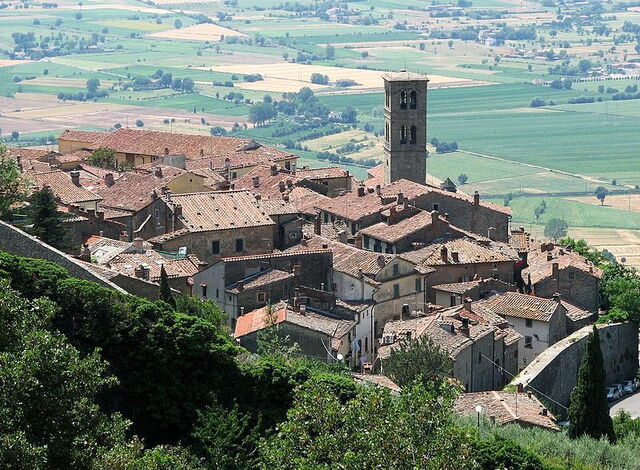
Each summer, the picturesque city of Cortona in Tuscany has a calender of events re-enacting medieval traditions through May and June. At the centre of these is the Giostra dell'Archidado, or the Archidado Joust, which takes place on the second Sunday of June. Existing since the Middle Ages and created officially in 1397, it commemorates the wedding of Francesco Casali, Lord of Cortona, to Antonia Salimbeni, a noblewoman from Siena. During the festival, the city streets are decorated with banners and flags and are given a medieval flare. The music of trumpets and drums resounds and stalls selling food, drink and crafts are set up. Medieval markets are also present on certain days.
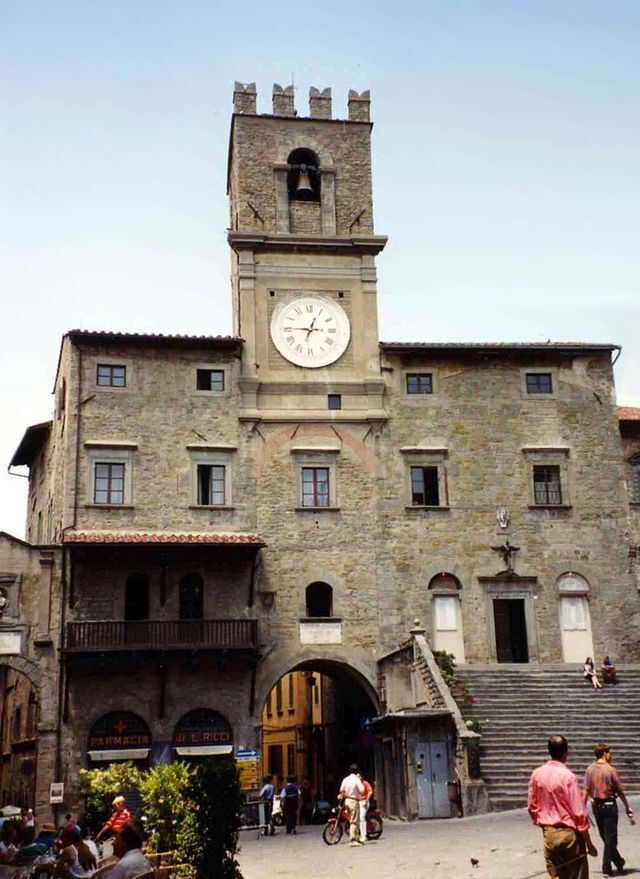
People in costume flood the town; ladies, knights, flag bearers, bowmen, soldiers, pages and aristocracy float by, delighting unsuspecting tourists who are caught by surprise. At 3pm a parade of these costumed individuals passes gaily though the city before arriving at the destination of the main event.
The Giostra Dell'Archidado, unlike other historical re-enactments of giostre in Italy, is not actually a jousting competition. A target is involved and the quarters of the city do compete in order to be crowned the winner but it is crossbows and arrows that are used instead of lances. The five quarters of Santa Maria, San Vincenzo, Peccioverardi, Sant'Andrea and Poggio San Marco each sends two representatives to vie for the honour of winning and the coveted Verretta D'Oro, or Golden Arrow.
Targets are comprised of concentric circles made up of sectors which award different points if hit - from +1 to +5 and -1 to -2. Competitors must stay 20m away from the target at all times and each person gets two turns at aiming for the target. The points are then tallied by judges and the results of each team and competitor are announced.
The Giostra Dell'Archidado, unlike other historical re-enactments of giostre in Italy, is not actually a jousting competition. A target is involved and the quarters of the city do compete in order to be crowned the winner but it is crossbows and arrows that are used instead of lances. The five quarters of Santa Maria, San Vincenzo, Peccioverardi, Sant'Andrea and Poggio San Marco each sends two representatives to vie for the honour of winning and the coveted Verretta D'Oro, or Golden Arrow.
Targets are comprised of concentric circles made up of sectors which award different points if hit - from +1 to +5 and -1 to -2. Competitors must stay 20m away from the target at all times and each person gets two turns at aiming for the target. The points are then tallied by judges and the results of each team and competitor are announced.
The team and quarter with the most combined points wins the contest.
This festival, with its dedication to traditional costume, music and food, is a particularly colourful and a real treat to the senses. It provides a good range of activities for the whole family and a real taste of the traditions and culture of Tuscany. If you're interested in history, sports or costume, it might be worth looking into a holiday villa nearby Cortona and seeing it for yourself!
This festival, with its dedication to traditional costume, music and food, is a particularly colourful and a real treat to the senses. It provides a good range of activities for the whole family and a real taste of the traditions and culture of Tuscany. If you're interested in history, sports or costume, it might be worth looking into a holiday villa nearby Cortona and seeing it for yourself!
Photo credits
picture 1: Patrick Denker / CC BY-SA 3.0;
picture 2: Torsolo / CC BY 2.0
picture 1: Patrick Denker / CC BY-SA 3.0;
picture 2: Torsolo / CC BY 2.0
