Donatello's name is one of the most enduringly famous of all Italian Renaissance artists but most are more likely to be familiar with the work of the Ninja Turtle than the sculptor. In fact, unlike with Da Vinci or Michelangelo, most would be hard pressed to even name a single one of his works which is rather a crying shame. Why not find a luxury villa in Florence and plan a trip to rectify this? Explore the city, see the sights and take note of the following works which are must-sees and a good introduction to the artist and his oeuvre.
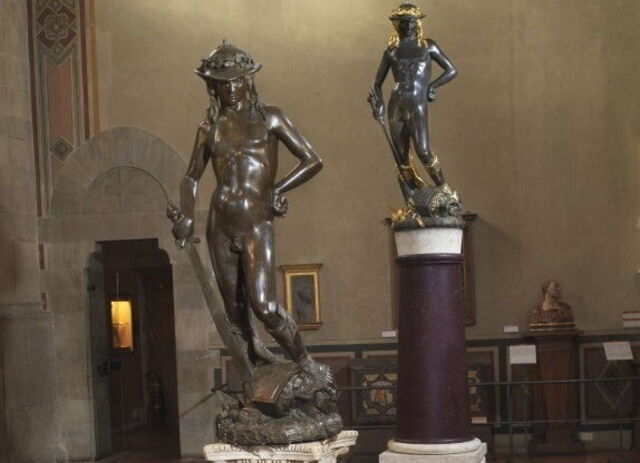
An obvious choice is his “David”. Less well-known than Michelangelo's, it was divisive at the time.
An obvious choice is his “David”. Less well-known than Michelangelo's, it was divisive at the time.
Now in the Museo Nazionale del Bargello, it was made in the 1440s and was the first unsupported standing work of bronze cast during the Renaissance and the first free-standing male nude since Antiquity. Donatello's David cuts a very different, controversial figure.
His pose is often considered unsettling and perhaps overly sexualised with debates surrounding as to whether or not the sculpture is some sort of statement on Donatello's sexuality or homosocial values of Florence at the time. Whatever the implications of David's pose, Donatello still produced a male nude unlike most of what was being produced at the time.
His pose is often considered unsettling and perhaps overly sexualised with debates surrounding as to whether or not the sculpture is some sort of statement on Donatello's sexuality or homosocial values of Florence at the time. Whatever the implications of David's pose, Donatello still produced a male nude unlike most of what was being produced at the time.
The slender, sinuous figure is mysterious and intriguing with an enigmatic smile on his face. It is something you could gaze at for hours, trying to figure out the mysteries surround it.
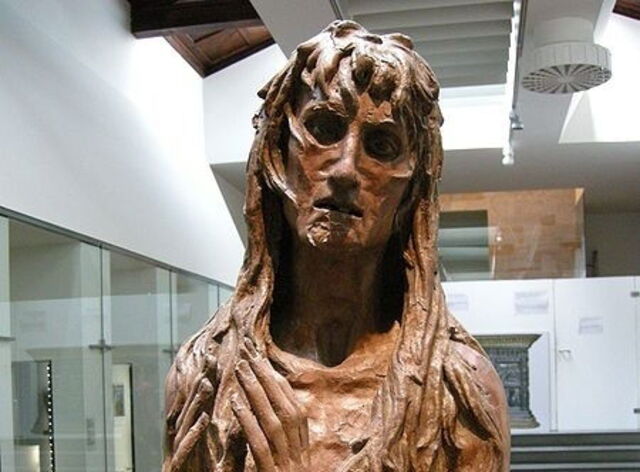
Donatello's “Penitent Magadalene” is another unusual depiction of a common theme. Carved from wood between 1453 and 1455 and now located in the Museo dell'Opera del Duomo, it shows a gaunt, raggedly dressed figure with sharp features and a pleading face. Magadalene is not the beauty that is normally depicted by artists but, instead, something more visceral, emotive, haunting and interesting.
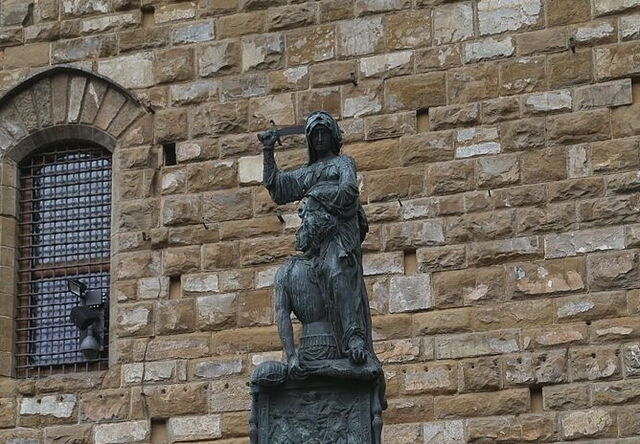
“Judith and Holofernes” is more typical in many ways. Located in the Palazzo Vecchio, it is another bronze work which was made in 1460. It depicts the Old Testament figure of Judith standing with Holofernes held by his hair and her sword held aloft. Commissioned by Cosimo de' Medici for a fountain in the garden of the Palazzo Medici-Riccardi, it is seen as a symbol of Medici rule in Florence, originally displayed with an inscription saying “Kingdoms fall through luxury [sin], cities rise through virtues. Behold the neck of pride severed by the hand of humility”. The Medici depicted themselves as the defenders of Florentine liberty, just as Judith was for her people.
Florence is the perfect place to see the works of Donatello and these are but three examples. If you want to get a taste of his work while in the city, it's a good place to start.
Donatello's “Penitent Magadalene” is another unusual depiction of a common theme. Carved from wood between 1453 and 1455 and now located in the Museo dell'Opera del Duomo, it shows a gaunt, raggedly dressed figure with sharp features and a pleading face. Magadalene is not the beauty that is normally depicted by artists but, instead, something more visceral, emotive, haunting and interesting.
“Judith and Holofernes” is more typical in many ways. Located in the Palazzo Vecchio, it is another bronze work which was made in 1460. It depicts the Old Testament figure of Judith standing with Holofernes held by his hair and her sword held aloft. Commissioned by Cosimo de' Medici for a fountain in the garden of the Palazzo Medici-Riccardi, it is seen as a symbol of Medici rule in Florence, originally displayed with an inscription saying “Kingdoms fall through luxury [sin], cities rise through virtues. Behold the neck of pride severed by the hand of humility”. The Medici depicted themselves as the defenders of Florentine liberty, just as Judith was for her people.
Florence is the perfect place to see the works of Donatello and these are but three examples. If you want to get a taste of his work while in the city, it's a good place to start.
Photo credits
picture 1: Polisemico / CC BY-SA 3.0;
picture 2: Sailko / CC BY 2.5;
picture 3: Rufus46 / CC BY-SA 3.0
picture 1: Polisemico / CC BY-SA 3.0;
picture 2: Sailko / CC BY 2.5;
picture 3: Rufus46 / CC BY-SA 3.0