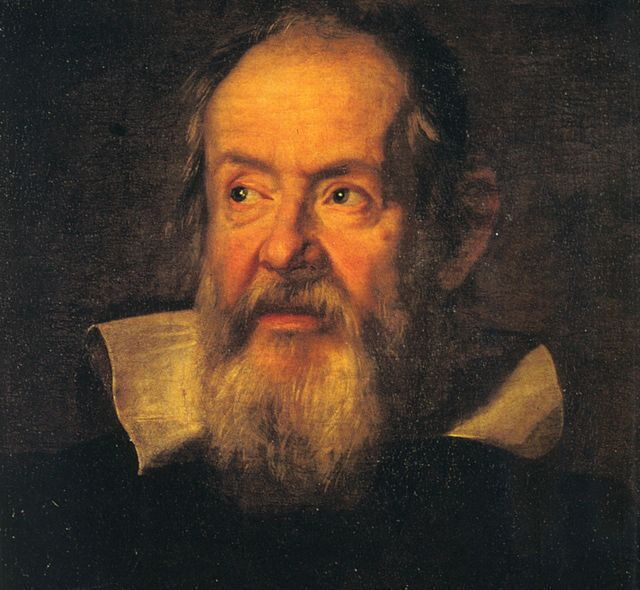
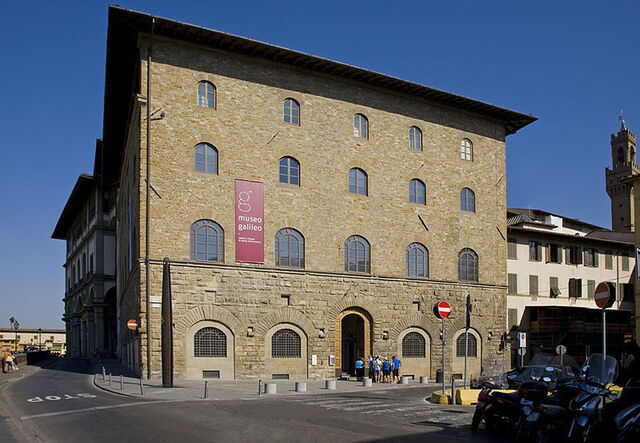
Located in Piazza dei Giudici, not far from the Uffizi, is Palazzo Castellani. The eleventh century building takes its name from its last private owners, the Castellani family and has been home to the Museo Galileo, or Institute and Museum of the History of Science, since 1930.
It displays an important collection of scientific instruments from the 13th century onwards and sheds light on the scientific tradition of Florence which is sometimes forgotten in favour of its artistic heritage.
It developed from the interests of the Medici and Lorraine families who added to scientific collections, as well as artistic ones, from the 17th into the 19th centuries.
It displays an important collection of scientific instruments from the 13th century onwards and sheds light on the scientific tradition of Florence which is sometimes forgotten in favour of its artistic heritage.
It developed from the interests of the Medici and Lorraine families who added to scientific collections, as well as artistic ones, from the 17th into the 19th centuries.
A Museum of Physics and Natural History was inaugurated in 1775 which eventually led to the establishment of the Institute of the History of Science and a museum by the University of Florence in 1930. In 2010, it was renamed the Museo Galileo after that most famous of Italian scientists.
The first floor exhibits the core of the original Medici collection; quadrants, astrolabus, meridianas, dials, compasses, armillary spheres and bussolas. Also displayed are Galileo’s original instruments, the thermometers belonging to the "Accademia del Cimento", the microscopes and meteorological instruments. The second floor has items from the Lorraine collection, used for mechanical, electrostatic and pneumatic applications. Other sections exhibit items such as mechanical clocks, sextants, octans, pharmaceutical and chemical apparatus, weights and measures.
Rooms are organised thematically such as The Medici Collections, Astronomy and Time, The Representation of the World, The Science of Navigation, The Science of Warfare, Galileo’s New World and The Accademia del Cimento: Art and Experimental Science.
The first floor exhibits the core of the original Medici collection; quadrants, astrolabus, meridianas, dials, compasses, armillary spheres and bussolas. Also displayed are Galileo’s original instruments, the thermometers belonging to the "Accademia del Cimento", the microscopes and meteorological instruments. The second floor has items from the Lorraine collection, used for mechanical, electrostatic and pneumatic applications. Other sections exhibit items such as mechanical clocks, sextants, octans, pharmaceutical and chemical apparatus, weights and measures.
Rooms are organised thematically such as The Medici Collections, Astronomy and Time, The Representation of the World, The Science of Navigation, The Science of Warfare, Galileo’s New World and The Accademia del Cimento: Art and Experimental Science.
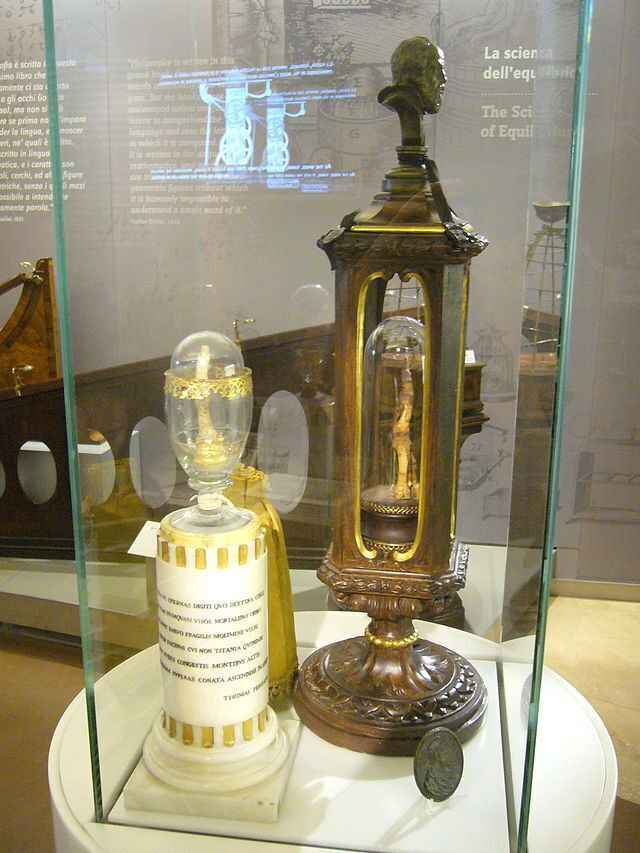
One particularly unusual item in the collection, however, is Galileo's middle finger. Removed by Anton Francesco Gori on March 12, 1737, 95 years after Galileo’s death, it was passed around for a couple hundred years. It eventually ended up in the museum's collection. In 2009 two more fingers and a tooth belonging to Galileo were discovered at an auction. His middle finger, index finger, thumb, and tooth are all on display in bell jars.
If you are interested in science, history or morbid curiosities, or are merely looking for something a little different, this museum might be just the thing that you've been looking for!
Find a holiday rental in Florence and you could pay a visit for yourself. It is open all week, 9.30-18.00 with an early closure at 13.00 on Tuesdays. Entry is free for kids under 6 and costs €8.00 for adults and €5.00 for students, children and the elderly. If you are visiting Florence, try and find the time to stop by and learn something new!
If you are interested in science, history or morbid curiosities, or are merely looking for something a little different, this museum might be just the thing that you've been looking for!
Find a holiday rental in Florence and you could pay a visit for yourself. It is open all week, 9.30-18.00 with an early closure at 13.00 on Tuesdays. Entry is free for kids under 6 and costs €8.00 for adults and €5.00 for students, children and the elderly. If you are visiting Florence, try and find the time to stop by and learn something new!
Photo credits
picture 2: Plindenbaum / CC BY-SA 3.0;
picture 3: MuseoGalileo / CC BY-SA 3.0;
picture 2: Plindenbaum / CC BY-SA 3.0;
picture 3: MuseoGalileo / CC BY-SA 3.0;