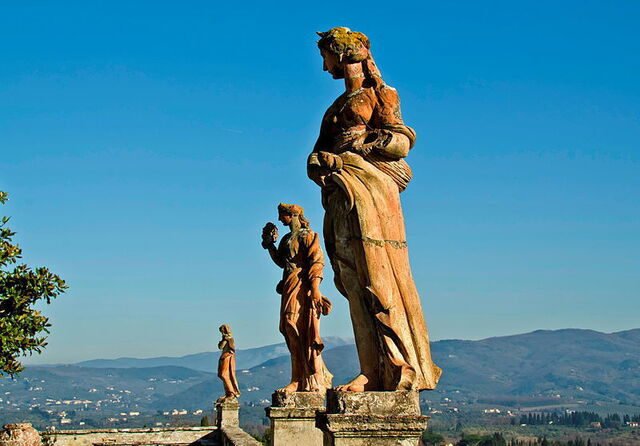
The most famous kind of terracotta in the world is produced in Impruneta, an ancient town south of Florence. Production of terracotta began in the area in the 14th century and has had a major impact on the town since then, affecting the landscape, architecture and economy, and changing it forever.
Seventeen kilns still produce wonderful objects made in terracotta to this day, some even having been set up in recent years, so that the industry is very much still alive and well.
If you've ever found yourself curious about the iconic red roofs which characterise the skylines of Tuscany, then find a holiday rental in Impruneta and learn all about this fascinating tradition and maybe even bring a little bit of Tuscany home with you.
Seventeen kilns still produce wonderful objects made in terracotta to this day, some even having been set up in recent years, so that the industry is very much still alive and well.
If you've ever found yourself curious about the iconic red roofs which characterise the skylines of Tuscany, then find a holiday rental in Impruneta and learn all about this fascinating tradition and maybe even bring a little bit of Tuscany home with you.
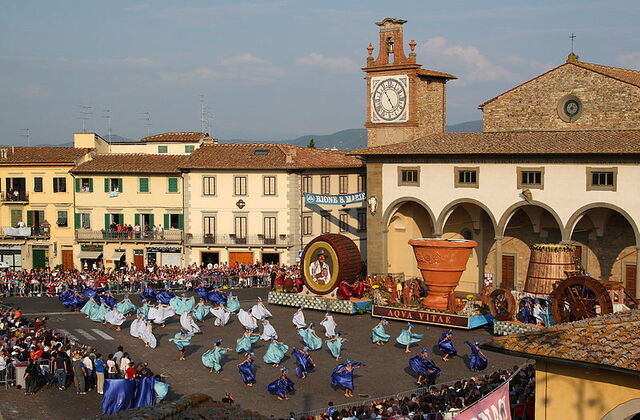
A notarial act, kept at the Florence State Archives, documents the foundation of the guild of the Impruneta kiln men to 1309. The most common terracotta products made here are vases, dishes and bricks. Additionally ‘orci’ of various sizes were also traditionally produced and used to carry the olive oil and wine which are also produced in the region.
Over the centuries, the resistant terracotta came to be used for roofing and decorating the facades of local houses, as we are familiar with today. Made from clay which is worked according to specific traditional methods and baked in a furnace, it is exactly the clay around Impruneta which makes this terracotta so unique as it is particularly rich in iron, extremely malleable and both elastic and resistant.
Over the centuries, the resistant terracotta came to be used for roofing and decorating the facades of local houses, as we are familiar with today. Made from clay which is worked according to specific traditional methods and baked in a furnace, it is exactly the clay around Impruneta which makes this terracotta so unique as it is particularly rich in iron, extremely malleable and both elastic and resistant.
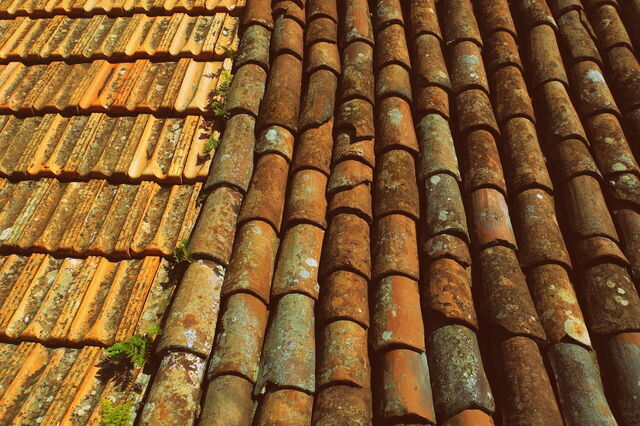
The seventeen kilns which are still active in the municipal district, both new and historical, exclusively process the marl excavated in the area, using artisanal techniques which have remained almost completely unchanged over the centuries and have only partially been complemented with more modern technologies. The kilns produce two types of goods, for building and for jars, pitchers, basins, pots and other garden furnishings. These are all still handcrafted using coiling, imprint mould and shell techniques.
When you visit the town today, you'll see this history and trade warmly embraced all over with large pots displayed at key locations and parks which are beautifully edged and ornamented by terracotta elements. If you want to learn more, you can also visit some of the kilns and shop the stores for locally-produced terracotta goods. For a unique day-trip in Tuscany, this little gem of a town really delivers on tradition, history, art and design.
When you visit the town today, you'll see this history and trade warmly embraced all over with large pots displayed at key locations and parks which are beautifully edged and ornamented by terracotta elements. If you want to learn more, you can also visit some of the kilns and shop the stores for locally-produced terracotta goods. For a unique day-trip in Tuscany, this little gem of a town really delivers on tradition, history, art and design.
Photo credit
Picture 1: Francesco Del Bravo / CC BY-SA 2.0;
Picture 2: Leonardo / CC BY-SA 2.0;
Picture 1: Francesco Del Bravo / CC BY-SA 2.0;
Picture 2: Leonardo / CC BY-SA 2.0;