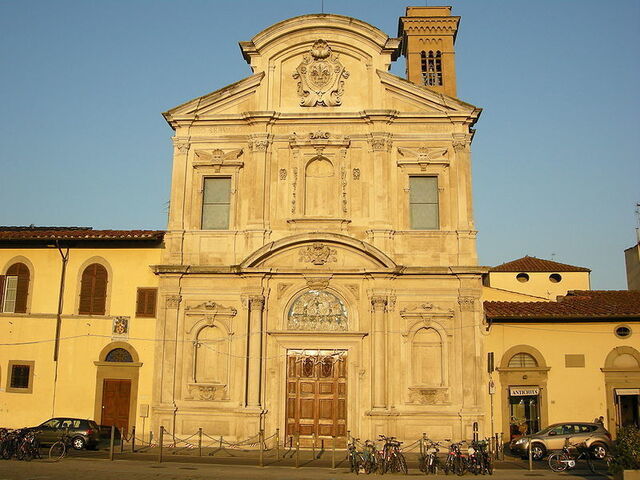
The Church of the Ognissanti, or Church of the All Saints, in Florence is one of the earliest Baroque examples in the city and dates to the first half of the 17th century. It is, perhaps, due to this that it is not a particularly flamboyant example of the Baroque. It is, however, a grand and beautiful building.
This great beauty and historic merit is enhanced by the presence of works inside the building by Ghirlandaio and Botticelli. Off the beaten tourist trail and very much a hidden gem, this is where you should head if you've found a luxury villa in Florence and want to take in some of her art and architecture without lining up for hours to get into a museum
This great beauty and historic merit is enhanced by the presence of works inside the building by Ghirlandaio and Botticelli. Off the beaten tourist trail and very much a hidden gem, this is where you should head if you've found a luxury villa in Florence and want to take in some of her art and architecture without lining up for hours to get into a museum
The church was part of the conventual complex founded by the Umiliati in 1251. Between 1251 and 1260, the complex was completed. The order was based on those devoted to evangelical poverty and members were dedicated to labour rather than begging for alms. Due to this, they built up the surrounding area for the working of wool and constructed the Santa Rosa weir, as well as an intricate system of canals.
This raised their prestige and they were invited by the city government to fill positions in the public administration and rich patrons began to adorn the church with some extraordinary works of art. Around 1310 a Madonna and Child with angels by Giotto was donated for the high altar (now in the Uffizi). In the 15th century Botticelli, who is buried in the church, and Ghirlandaio both worked at Ognissanti.
This raised their prestige and they were invited by the city government to fill positions in the public administration and rich patrons began to adorn the church with some extraordinary works of art. Around 1310 a Madonna and Child with angels by Giotto was donated for the high altar (now in the Uffizi). In the 15th century Botticelli, who is buried in the church, and Ghirlandaio both worked at Ognissanti.
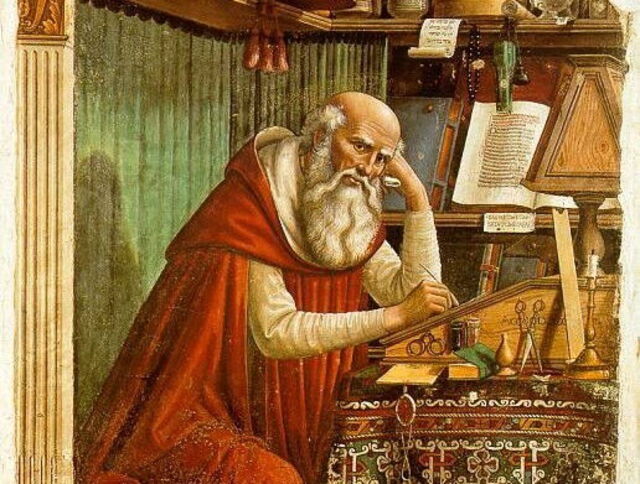
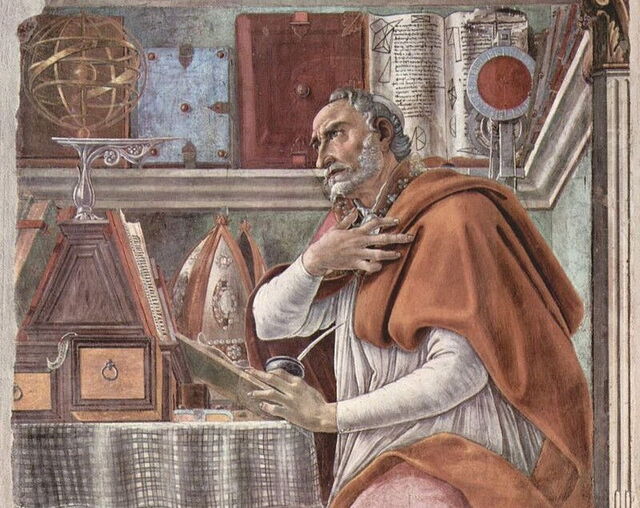
The Vespucci family commissioned from Ghirlandaio a fresco of the Last Supper for the convent refectory and he also painted frescoes of the Madonna of Mercy and the Pietà on the second altar. Between the third and the fourth altar is a fresco of St. Augustine in his study by Botticelli, facing a pendant piece of St. Jerome by Ghirlandaio.
In the 16th century, the church was occupied by the Franciscans who set about altering the complex. Two new cloisters were built, the church was re-consecrated in 1582 and was renamed San Salvatore a Ognissanti. In the 17th century, the cloister was frescoed with scenes from the Life of St. Francis by Jacopo Ligozzi, Giovanni da San Giovanni, and others.
In the 16th century, the church was occupied by the Franciscans who set about altering the complex. Two new cloisters were built, the church was re-consecrated in 1582 and was renamed San Salvatore a Ognissanti. In the 17th century, the cloister was frescoed with scenes from the Life of St. Francis by Jacopo Ligozzi, Giovanni da San Giovanni, and others.
Between the 17th and 18th century new altars, paintings and sculptures were installed. In 1637 the new, elegant Baroque façade was finished, according to a design by Matteo Nigetti.
A little-known gem, this church is well worth wandering into if you find yourself in Florence.
A little-known gem, this church is well worth wandering into if you find yourself in Florence.