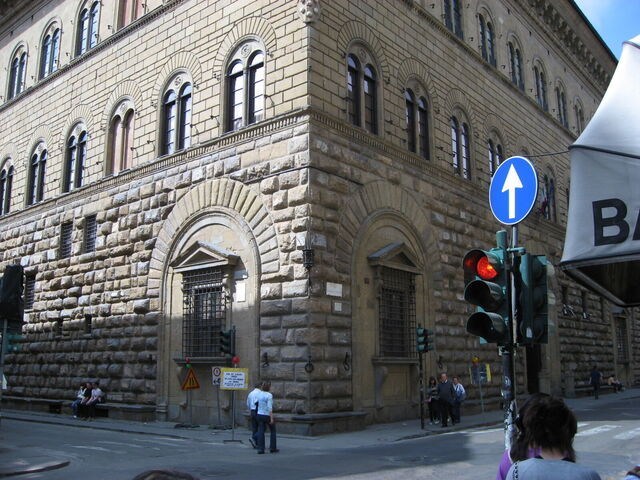
The Palazzo Medici Riccardi, named for the family that built it and the family that expanded it, is a Florentine Renaissance palace that is the seat of the Metropolitan City of Florence and is also opened to the public (in part) as an exhibition space that offers a program of temporary exhibitions.
Originally, these were largely dedicated to the major protagonists of modern and contemporary art but has recently been more focused on creating greater understanding of the historic and artistic context of the palazzo.
Furthermore, there is a stunning frescoed chapel that is an attraction in its own right. As such, the palace is a fascinating sight for many reasons and, in particular, a wonderful peek into one of the most opulent homes that the city has ever seen. Just find a luxury villa in Florence and visit this wonderful architectural and cultural gem for yourself.
Originally, these were largely dedicated to the major protagonists of modern and contemporary art but has recently been more focused on creating greater understanding of the historic and artistic context of the palazzo.
Furthermore, there is a stunning frescoed chapel that is an attraction in its own right. As such, the palace is a fascinating sight for many reasons and, in particular, a wonderful peek into one of the most opulent homes that the city has ever seen. Just find a luxury villa in Florence and visit this wonderful architectural and cultural gem for yourself.
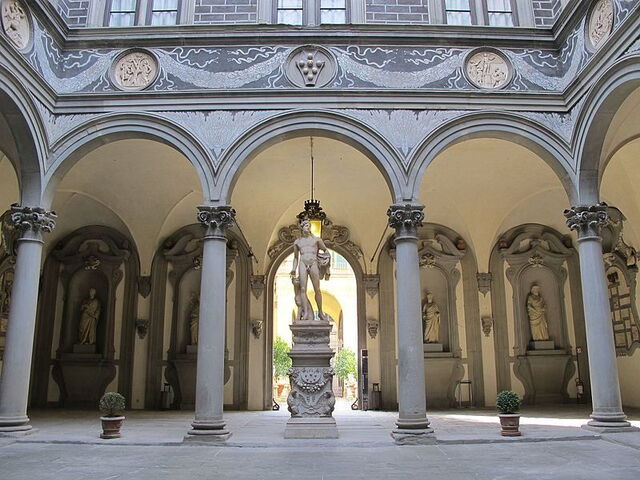
Originally built for Cosimo de' Medici, head of the Medici banking family, the palace was built between 1444 and 1484, according to the designs of Michelozzo di Bartolomeo. Famous for its distinct and impressive rusticated masonry, it is a great example of the typical Renaissance palace.
It is characterised by its tripartite elevation, emphasized by horizontal stringcourses dividing the building into storeys of decreasing height and transitioning from the rusticated masonry of the ground floor to the more delicately refined stonework of the third floor.
This gives the effect of making the building lighter and taller as the eye moves upward. Influenced by Ancient Roman architecture and the work of Brunelleschi, it features a beautiful open colonnaded court at the centre of its plan that mirrors Roman peristyles.
It is characterised by its tripartite elevation, emphasized by horizontal stringcourses dividing the building into storeys of decreasing height and transitioning from the rusticated masonry of the ground floor to the more delicately refined stonework of the third floor.
This gives the effect of making the building lighter and taller as the eye moves upward. Influenced by Ancient Roman architecture and the work of Brunelleschi, it features a beautiful open colonnaded court at the centre of its plan that mirrors Roman peristyles.
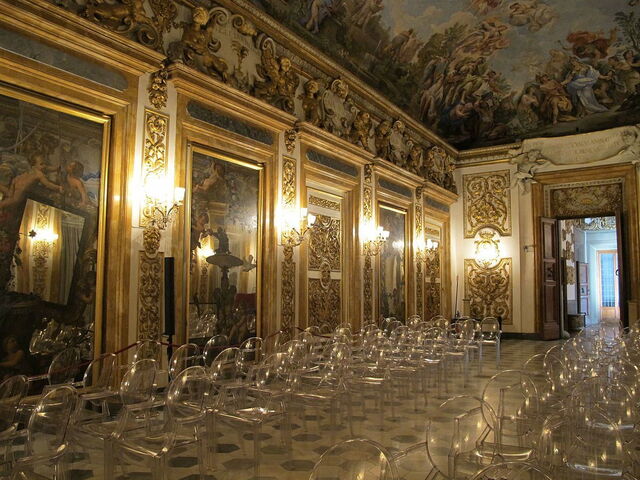
Another distinctive feature are Michelangelo's unusual ground-floor "kneeling windows" with exaggerated scrolling consoles that appear to support the sills. The palace is also famous for its incredible interiors, particularly its Chapel, which was frescoed with the Procession of the Magi in 1459 by Benozzo Gozzoli. The price of entry to the palace also includes access to the temporary exhibitions and the chapel so, if you want to get the most bang for your buck, this is one stop that features an iconic Renaissance building, architectural details by Michelangelo, stunning period décor and amazing works of art all under one roof.
Photo credits
Picture 1: Gryffindor / CC BY-SA 3.0;
Picture 2: ho visto nina volare / CC BY-SA 2.0;
Picture 3: ho visto nina volare / CC BY-SA 2.0
Picture 1: Gryffindor / CC BY-SA 3.0;
Picture 2: ho visto nina volare / CC BY-SA 2.0;
Picture 3: ho visto nina volare / CC BY-SA 2.0