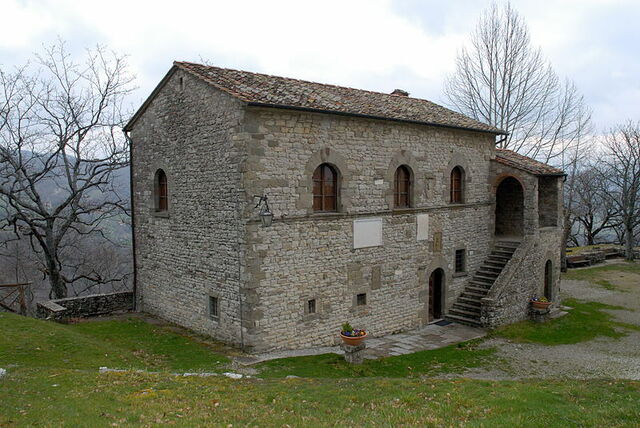
Not far from Arezzo are two towns made famous by their most well-known sons, Anghiari and Caprese Michelangelo, where Da Vinci and Michelangelo, respectively, were born. In both of these places you will find museums dedicated to these two great pillars of the Italian Renaissance and they are must-sees for art-lovers who are travelling in Tuscany and want to delve further into the lives and works of two of the most important figures in the history of European art. The Michelangiolesco Museum is an easy outing for those who have found a vacation rental in Arezzo, located within the province of Arezzo and a short distance from the city of Arezzo in Caprese Michelangelo.
While the museum was opened in 1964, to mark the 400th anniversary of the death of Michelangelo, it can actually trace its origins all the way back to 1875. The Michelangiolesco Museum is housed inside the Caprese Michelangelo fortress complex, which is made up of three main buildings, the Palazzo del Podestà, Palazzo Clusini and the Corte Alta, as well as a garden that is open to the outdoors. Caprese came under the rule of Florence after the town submitted to the Florentine Republic in 1384 and from that point onwards Florentine podestàs, local magistrates, took turns residing in the town on an annual basis. It is in the residence of these local rulers, the Palazzo del Podestà, that Michelangelo was born on the 6th of March 1475 to Ludovico di Leonardo Buonarroti Simoni, who was the reigning podestà, in the area at the time.
While the museum was opened in 1964, to mark the 400th anniversary of the death of Michelangelo, it can actually trace its origins all the way back to 1875. The Michelangiolesco Museum is housed inside the Caprese Michelangelo fortress complex, which is made up of three main buildings, the Palazzo del Podestà, Palazzo Clusini and the Corte Alta, as well as a garden that is open to the outdoors. Caprese came under the rule of Florence after the town submitted to the Florentine Republic in 1384 and from that point onwards Florentine podestàs, local magistrates, took turns residing in the town on an annual basis. It is in the residence of these local rulers, the Palazzo del Podestà, that Michelangelo was born on the 6th of March 1475 to Ludovico di Leonardo Buonarroti Simoni, who was the reigning podestà, in the area at the time.
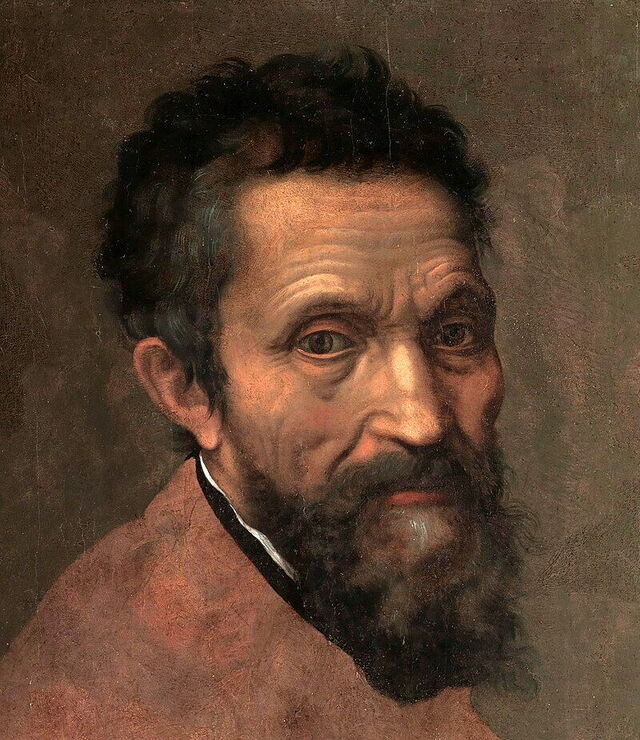
In the following centuries, the various buildings eventually fell out of use and into ruin and the Palazzo del Podestà was used for the same purpose and later became the seat of local mayors until the second half of the nineteenth century. This was until 1875, when Michelangelo’s birth certificate was discovered and the fortress was restored. Then, in 1964, after the existing buildings and ruins were incorporated into new modern structures, the complex finally came to be a museum dedicated to the most famous person ever to have been born inside its walls. The Palazzo del Podestà and Corte Alta are home to exhibitions and the Palazzo Clusini houses the museum's ticket office and a bookshop on the ground floor and the Michelangiolesca Library is located on the upper floors.
Today, the museum is home to a wonderful collection of objects that tell the story of the town, the artist, the art, and other Italian artists. The main five thematic threads throughout the space are: the Fortress of Caprese and its history, the life and work of Michelangelo, the life and work of the astronomer Giovanni Santini who was born in Caprese in the 18th century, 19th century small-scale Italian sculpture, and 20th century Italian sculpture.
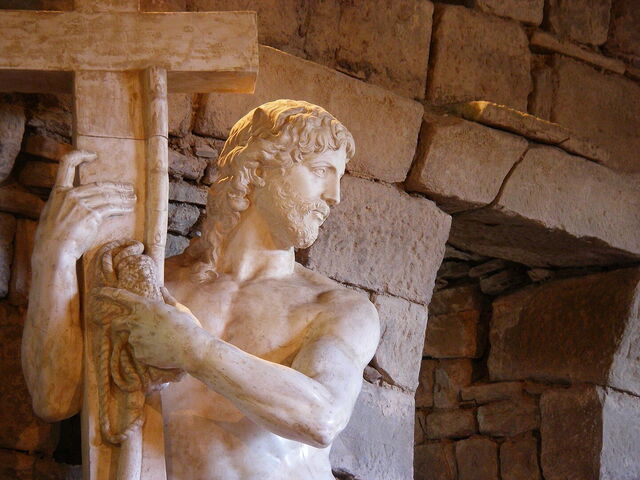
Understandably, the Palazzo del Podestà does not retain the appearance of Michelangelo’s lifetime as it continued to be used and altered and updated long after he was dead. However, the residential rooms on the first floor are decorated with non-original Renaissance furniture to somewhat recreate the atmosphere and give a sense of how it might have looked at that time. It is in these rooms that you will find a series of photographic reproductions of the fresco cycle made between 1613 and 1620 in the Casa Buonarroti in Florence by Michelangelo's great-grandnephew, Michelangelo the Younger, which depicts 23 scenes from the life of Michelangelo. There are also some other works of art on display in these rooms including a fifteenth-century triptych of the “Madonna between Saints,” by Giuliano Amidei. On the ground floor of the building there is a projection room set up in which a documentary about the life and work of Michelangelo plays, there are also copies of documents relating to Michelangelo on display, including the famous birth certificate, photographic reproductions and nineteenth-century plaster casts of his works. This collection of casts extends into the large hall space in the Corte Alta, where copies of the larger-scale pieces are displayed. In addition to all of this, there are nineteenth-century prints of scenes from the Sistine Chapel cycle of frescoes on display on the ground floor of the Palazzo.
Today, the museum is home to a wonderful collection of objects that tell the story of the town, the artist, the art, and other Italian artists. The main five thematic threads throughout the space are: the Fortress of Caprese and its history, the life and work of Michelangelo, the life and work of the astronomer Giovanni Santini who was born in Caprese in the 18th century, 19th century small-scale Italian sculpture, and 20th century Italian sculpture.
Understandably, the Palazzo del Podestà does not retain the appearance of Michelangelo’s lifetime as it continued to be used and altered and updated long after he was dead. However, the residential rooms on the first floor are decorated with non-original Renaissance furniture to somewhat recreate the atmosphere and give a sense of how it might have looked at that time. It is in these rooms that you will find a series of photographic reproductions of the fresco cycle made between 1613 and 1620 in the Casa Buonarroti in Florence by Michelangelo's great-grandnephew, Michelangelo the Younger, which depicts 23 scenes from the life of Michelangelo. There are also some other works of art on display in these rooms including a fifteenth-century triptych of the “Madonna between Saints,” by Giuliano Amidei. On the ground floor of the building there is a projection room set up in which a documentary about the life and work of Michelangelo plays, there are also copies of documents relating to Michelangelo on display, including the famous birth certificate, photographic reproductions and nineteenth-century plaster casts of his works. This collection of casts extends into the large hall space in the Corte Alta, where copies of the larger-scale pieces are displayed. In addition to all of this, there are nineteenth-century prints of scenes from the Sistine Chapel cycle of frescoes on display on the ground floor of the Palazzo.
As well as the large focus of the museum on Michelangelo, there is: a small exhibition dedicated to the astronomer Giovanni Santini; there is a collection of small-scale nineteenth-century Italian sculptural works in bronze, marble, plaster, wax, and other media, as well as a collection of drawings by 19th and early 20th century Italian sculptors in the main hall and two secondary rooms of the Corte Alta; finally, there is a collection of bronze and wood sculptures by artists from the second half of the 20th century in the Sculpture Garden and Corte Alta. Artists other than Michelangelo that are included in the collections of the museum include Battistini Alfredo, Giovanni Battista Amendola Costantino Barbella, Ernesto Bazzaro, Giovanni Maria Benzoni, Ernesto Biondi, Jorge Gonzalez Camarena, Antonio Canova, Giovanni Dupré, Georg Ehrlich, Carlo Fontana, Bruno Innocenti, Ken Johnson, Paolo Troubetzkoy, Antonio Ugo, Ettore Ximenes, and Arnaldo Zocchi, among others.
Costing just four euros to enter, this incredible gem is a must-see for Michelangelo fans who have found a holiday rental in Arezzo and are spending time in the area and for art-lovers looking for a lot of bang for their buck. Be sure to check out this amazing museum if you are in this part of Tuscany as it is easily missed but is well worth a visit!
Costing just four euros to enter, this incredible gem is a must-see for Michelangelo fans who have found a holiday rental in Arezzo and are spending time in the area and for art-lovers looking for a lot of bang for their buck. Be sure to check out this amazing museum if you are in this part of Tuscany as it is easily missed but is well worth a visit!