Archive for 'Must See Attractions'


Piazzale Michelangelo
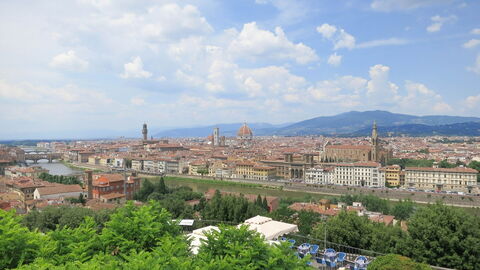
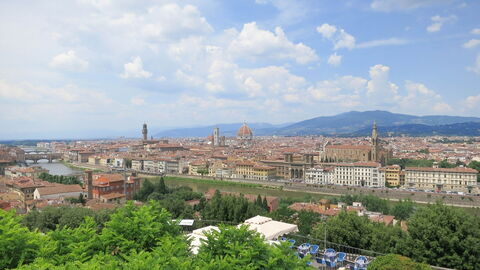
Google seems to have the answers to all of life's questions, right? Whether you are looking for directions or somewhere good to eat, want to know when a museum closes or when to avoid peak crowds, having the internet at your fingertips takes the work out of holiday-making and makes your life a hell of a lot easier.

In fact, they've gone a step further now and Google has even compiled all of their data to generate automatic itineraries of destinations based on the post popular attractions, their locations and the distances between them. Based on the amount of days you will be in the place you have chosen, there are a variety of itineraries to choose from and one can't help but wonder at how well an algorithm might plan a trip.

So, here is Google's suggestion for what to do with 24 hours in Florence. Just find a luxury villa in Florence and see for yourself how suitable it might be.     Read More


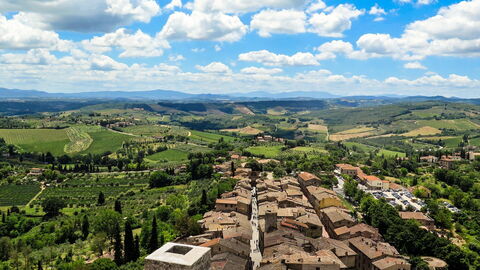
La Torre del Candeliere, or The Candlestick Tower, was erected in 1228 as both a watchtower and a symbol of the independence of the town of Massa Marittima, which had just been liberated from the dominion of a Bishop-Prince at the time. It was originally even taller, but was later greatly altered under Sienese rule in the 14th century, changing their symbol of freedom forever and connecting it to their own Cassero Senese, or Sienese Fort.

To get there is a bit of a trek. Once you leave the Piazza Garibaldi, there is a side street that climbs a very steep hill. At the end of the hill, there is a wall and an archway, which marks your entrance into the Sienese section of the city. This is where the Sienese expanded the city's borders beyond the medieval fort built by the Pisans and this is where you will find the Torre del Candeliere and Sienese Fortress, both part of this newer section of the city.     Read More


Ecce Homo
Most likely, anyone who has found a luxury villa in Florence and is planning a trip to the city has already made plans to visit the Palazzo Pitti and pencilled it into the itinerary. However, if we might, we would make a suggestion. Take a whole day for the excursion, take your time and make sure to set some aside for the Gallery of Modern Art.

The Palazzo Pitti is a vast and elaborate Renaissance palace in the city of Florence. It was originally the luxury home of a wealthy banker called Luca Pitti but was later bought by the Medici family in 1549 and became their primary residence.

Today it belongs to the state and is open to the public. The palace itself is an important and intriguing tourist attraction and the surrounding Boboli Gardens are also well worth a visit, however, that is not nearly where the cultural and historic riches of the building end: it is also home to the Palatine Gallery, Silver Museum, Gallery of Modern Art and several other gallery spaces and exhibitions.     Read More


A segment of the True Cross frescoes
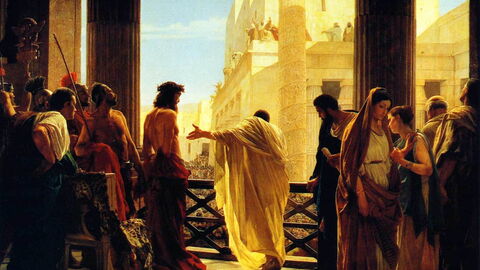
The Cappella Bacci is a chapel located in the apse of 14th-century Basilica di San Francesco, a single-nave building in Arezzo dedicated to St Francis and built reflecting the values typical of the mendicant orders of the day.

Work was begun in the second half of the thirteenth century and completed in the fourteenth, with a campanile added in the sixteenth century. Both exterior and interior are somewhat grave and austere, though the interior is a richer and less intensely pared back place.

The exterior is expressed with a roughly textured stone facade without any real ornamentation, while the interior is accented with niches containing fourteenth-century and Renaissance ornamentation and Gothic chapels.

One among these chapels is particularly famous: the Bacci Chapel, and the reason for its recognition and fame? It is home to a cycle of incredible frescoes by the famous Renaissance painter Piero della Francesca. Just find a luxury villa in Arezzo and drop by to see it for yourself.     Read More


One of the great beauties of Tuscany is a beach that may have escaped your attention. Cala Violina is one of the best beaches in the country and endlessly tops lists that back this claim up.

A stunning soft white sand half-moon cove, it is located in the Golfo di Follonica right in the heart of the Riserva Naturale delle Bandite di Scarlino and the Le Costiere di Scarlino Area Naturale Protetta di Interesse Locale. As such, this Maremma gem is rather unlike many of Italy's other more built-up beaches in that it is completely unspoiled.

Most beaches in Italy require fees to be paid for their use and the use of their special facilities but Cala Violina is a “spiaggia libera", (literally a “free beach”) a public beach, that is devoid of the rows of bars, sunbeds and parasols that dot other shores.     Read More