Archive for 'Tourist Attractions'


Not far from Montepulciano, in the rolling, lush landscape of this famous and beautiful wine area in Tuscany, you will find a truly incredible garden. The Parco Villa Trecci is something really special, one of those places that is absolutely breathtakingly lovely. Surrounding the Villa Trecci, a country villa located along the Via di San Bartolomeo, a stone’s throw from Monticchiello, the gardens of the park cover a total area of three hectares and are divided up into different sections such as the rose garden, olive grove, and more. Designed by the landscape architect Adelmo Barlesi and begun in 2014, the Parco Villa Trecci is a feast for the senses, a modern vision of bucolic bliss, and perfect contemporary villa garden. If you have found a vacation rental in Montepulciano and are exploring the area, it is a must-see.

The park, as noted, is made up of different areas and sections including the grey plants garden, the grove, the rose garden, the large graminaceous flowerbed (or flowerbed of grasses), the lake with the aquatic plants and the swamp, the lemon trees glasshouse, and the garden library. It is home to 400 species of plants, almost two dozen varieties and hybrids of roses, lots of different kinds of trees, herbs, fountains, statues, and more. As a result, it is a colourful, beautiful space that shifts, changes, surprises, and delights as you wander around. The herbs, flowers, and citrus plants all give off incredible aromas, insects and birds living in the gardens chirp and buzz, the blooms and grasses in different hues are ruffled by the breeze; it is a living, breathing, multi-sensory experience.     Read More
  

Bibbiano Castle
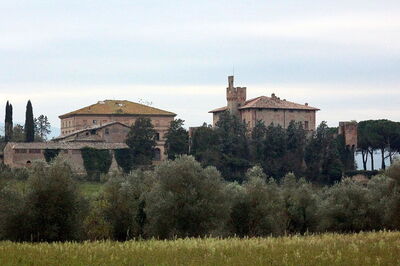
In the last article, we mentioned the especially lovely Tuscan medieval walled town of Buonconvento, which makes for a perfect day trip idea if you have found a luxury villa in Siena and are spending time exploring the wider province and all that it has to offer. If you are already in the area of Buonconvento and also have a particular penchant for the medieval, then we might additionally suggest swinging by Bibbiano Castle to see a lovely example of a Tuscan medieval castle while you are at it.

Bibbiano Castle is located in a particularly scenic part of Tuscany that is also quite removed from mass tourism and the potential madness of crowds and queues. For those interested in a more relaxed type of travelling and a slower pace of life, it is an ideal destination. Named for the “bibbio”, or widgeon, an aquatic bird that lives in the area, the origins of a settlement at the castle date back to 850 when it was home to the Longobard count Guinigi di Reghinari during the time of Emperor Ludovico II. It was in possession of the Guiglieschi and then the Cacciaconti families until the 13th century, when it was handed over to the Republic of Siena and re-fortified under their rule. After this is was destroyed but then rebuilt in the fifteenth century by its new owner the Cardinal Raffaello Petrucci, according to designs by the architect Baldassarre Peruzzi.     Read More


Buonconvento
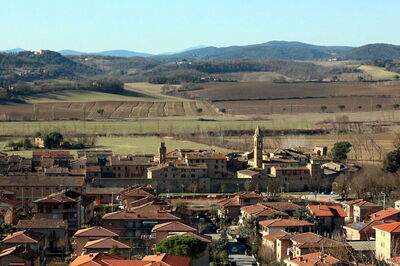
Italy is home to lots and lots of pretty little historic villages and those that are set amongst the rolling hills, lines of cypresses, and vineyards of the Tuscan countryside are especially charming. In fact, the most beautiful villages in the country are officially awarded with this title and can be readily found listed online. However, if you were thinking about booking a luxury villa in Siena and spending time exploring the wider area of the province, then we have a suggestion of one such town to pencil into your plans: the impossibly lovely medieval walled town of Buonconvento.     Read More


Cycling
The seaside town of Viareggio is the coastal gem of Tuscany and an excellent holiday destination for many different reasons from her rich traditions to her beautiful beaches. If you have chosen a luxury villa in Viareggio you will find plenty of things to see and do in the city itself and that day-trips to other Tuscan towns and cities can be readily organised as well. However, if you are looking to get out and explore Viareggio, in particular, and aren’t quite sure where to get started, then we might suggest heading to the Parco Pineta di Ponente, or Pineta di Ponente Park (Western Pine Forest).     Read More


There is no shortage of wineries in the Chianti region of Tuscany. Famous for her wines, with one of the most globally-renowned types of wines on the market bearing her name, Chianti is all about wine, wine culture, and wineries. The landscape of Chianti is just dotted by farmhouses, wineries, vineyards, olive groves, lovely stone towns, and castles and, as such, there is endless choice of places to go to learn about wine in Chianti, to taste wine in Chianti, to buy wine in Chianti, and much more besides. However, one particularly perfect place to do all of the things mentioned above and to do so in the most typically beautiful and typically Chianti of settings is the Castello di Verrazzano winery. Set inside a stunning Chianti castle that is nestled amongst the beautiful landscape of rolling hills blanketed by vineyards and olive groves of the region, the Castello di Verrazzano is both well-respected and utterly gorgeous. It is the ideal place to sip on some delicious Tuscan wines if you have found a luxury villa in Chianti.

The castle is named after the Verrazzano family, originally hailing from Lombardy and famous due to their most notable family member Giovanni da Verrazzano (who was the explorer that discovered the bay of New York and was born in Castello di Verrazzano in 1485), and the name likely derives from the Latin words "verres" (meaning wild boar) and "zona," (meaning place) and translates to the “land of the wild boar.” However, the history of the castle is much older and was originally an Etruscan and then a Roman settlement. The Verrazzano family came into possession of the castle in the 7th century and remained there until the family line ended in 1819. Since then, the castle has passed through several different hands but has been managed by the Florentine Cappellini family since 1958.     Read More