La Torre del Candeliere, or The Candlestick Tower, was erected in 1228 as both a watchtower and a symbol of the independence of the town of Massa Marittima, which had just been liberated from the dominion of a Bishop-Prince at the time. It was originally even taller, but was later greatly altered under Sienese rule in the 14th century, changing their symbol of freedom forever and connecting it to their own Cassero Senese, or Sienese Fort.
To get there is a bit of a trek. Once you leave the Piazza Garibaldi, there is a side street that climbs a very steep hill. At the end of the hill, there is a wall and an archway, which marks your entrance into the Sienese section of the city. This is where the Sienese expanded the city's borders beyond the medieval fort built by the Pisans and this is where you will find the Torre del Candeliere and Sienese Fortress, both part of this newer section of the city.
21
Apr
2017
2017
Posted in: Architectural Gems
Churches & Religious Buildings
Florence
History
Localities
Renaissance
Tourist Attractions
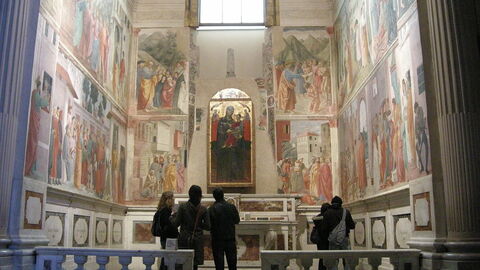
The Brancacci Chapel is one of the chapels within the Church of Santa Maria del Carmine in Florence. In fact, it is the shining jewel of the building as much was lost in an 18th century fire, leaving the church otherwise very plain.
Miraculously, this great artwork survived and is even often referred to as the “Sistine Chapel of the Early Renaissance” due the wonderful frescoes that adorn its walls. Just find a luxury villa near Florence and you can discover these extraordinary paintings for yourself!
In 1424, frescoes were commissioned by Felice Brancacci, a wealthy Florentine merchant and statesman, to decorate the chapel and to illustrate the life of St. Peter. They were designed by Masolino da Panicale and he was aided in their production by his pupil, Masaccio. Masaccio then took over in 1428 but, sadly, passed away that very year at just 27 years of age.
Miraculously, this great artwork survived and is even often referred to as the “Sistine Chapel of the Early Renaissance” due the wonderful frescoes that adorn its walls. Just find a luxury villa near Florence and you can discover these extraordinary paintings for yourself!
In 1424, frescoes were commissioned by Felice Brancacci, a wealthy Florentine merchant and statesman, to decorate the chapel and to illustrate the life of St. Peter. They were designed by Masolino da Panicale and he was aided in their production by his pupil, Masaccio. Masaccio then took over in 1428 but, sadly, passed away that very year at just 27 years of age.
6
Apr
2017
2017
Posted in: Architectural Gems
Curiosities
Localities
Lucca
Must See Attractions
Tourist Attractions
Tuscan Coast
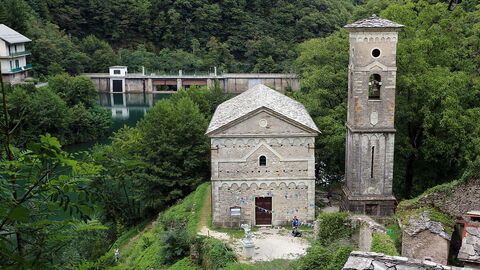
Natural disasters, emigration, accidents and other unexpected events have led to the creation of quite a few ghost towns around Italy. However, the Italian iteration of the ghost town is often far more beautiful than their counterparts worldwide. Ghost towns are always intriguing and fascinating sights that people positively itch to explore but these Italian towns also capture hearts with their incredibly picturesque settings and poetically decaying buildings.
A good Tuscan example for those exploring the region and looking for an attraction that is a little different or for those intrigued by such things is the town of Isola Santa. Located near the Versilian Coast, just find a vacation rental in Versilia and drag yourself from the beach long enough to spend a day exploring this fascinating ghost town.
A good Tuscan example for those exploring the region and looking for an attraction that is a little different or for those intrigued by such things is the town of Isola Santa. Located near the Versilian Coast, just find a vacation rental in Versilia and drag yourself from the beach long enough to spend a day exploring this fascinating ghost town.
31
Mar
2017
2017
In our final post in this series, here are two more architectural gems that one might make time for when exploring the incredibly rich culture and artistic heritage of the region. Of course, there are many other wonderful examples of great architectural feats all around Tuscany but these are some of our personal favourites and are, largely, somewhat less well-known than the most famous works that every tourist seems to flock to magnetically. Fnd a luxury villa in Tuscany and explore these delightful structures for yourself.
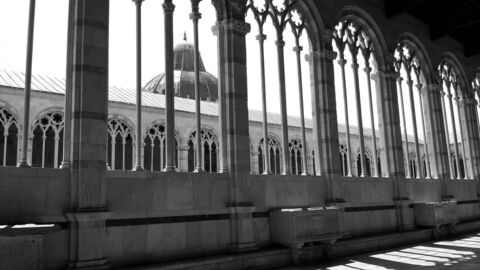
Florence, of course, is packed to the gills with artistic and architectural gems. However, one of the most striking and theatrical is the Laurentian Library. Home to the most important and prestigious collection of antique books in all of Italy and one of the greatest scholarly legacies left behind the Medici family that is still in existence, it was born of the passion of Cosimo the Elder.
As he was an avid collector, it became necessary in 1523 for Pope Clement VII (Giulio de' Medici) to commission a new library to house the massive collection.
Florence, of course, is packed to the gills with artistic and architectural gems. However, one of the most striking and theatrical is the Laurentian Library. Home to the most important and prestigious collection of antique books in all of Italy and one of the greatest scholarly legacies left behind the Medici family that is still in existence, it was born of the passion of Cosimo the Elder.
As he was an avid collector, it became necessary in 1523 for Pope Clement VII (Giulio de' Medici) to commission a new library to house the massive collection.
31
Mar
2017
2017
Posted in: Architectural Gems
Castles & Palaces
Chianti
Churches & Religious Buildings
Localities
Siena
Tourist Attractions
Continuing on from our last post, here are some more architectural gems around Tuscany that are well worth a visit if you are interested in art and culture. Once you have found a luxury villa in Tuscany and are planning your trip, be sure to pencil some of these beauties into your itinerary.
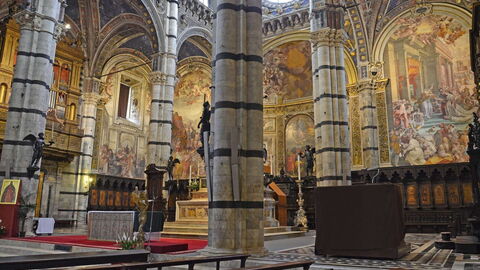
Siena's Cathedral is a perfect example. It was built between 1215 and 1263 and was designed by Nicola Pisano. His son, Giovanni, continued the design when more building was undertaken from 1285. The upper half of the facade was not added until 14th century, a time of great wealth and prosperity for Siena. At the time, plans were considered to transform the church into a giant masterpiece that could even rival the mammoth St. Peter's in Rome but this never came to pass.
It is still a stunning building, Gothic in style, and elaborately embellished inside and out. Its anachronistically Romanesque black-and-white striped campanile is particularly iconic.
Siena's Cathedral is a perfect example. It was built between 1215 and 1263 and was designed by Nicola Pisano. His son, Giovanni, continued the design when more building was undertaken from 1285. The upper half of the facade was not added until 14th century, a time of great wealth and prosperity for Siena. At the time, plans were considered to transform the church into a giant masterpiece that could even rival the mammoth St. Peter's in Rome but this never came to pass.
It is still a stunning building, Gothic in style, and elaborately embellished inside and out. Its anachronistically Romanesque black-and-white striped campanile is particularly iconic.