Archive for 'Churches & Religious Buildings'


Medici Chapel
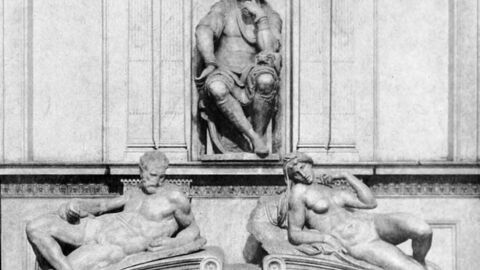
The Medici were bankers, unofficial princes of Florence, then official rulers of the city and one of the greatest dynasties Italy has ever seen. Their stamp remains all over the country but it is most evident and visible in Florence, where they were incredible patrons of the arts. As they were of, ruled and designed the city, many were, of course, laid to rest there as well. One of the most important burial sites for the family are the Cappelle Medicee (or Medici Chapels), two structures at the Basilica of San Lorenzo.

Dating from the 16th and 17th centuries, and built as extensions to Brunelleschi's 15th-century church to celebrate and accommodate the Medici family, the chapels consist of the Sagrestia Nuova, (or New Sacristy) designed by Michelangelo, and the 17th century Cappella dei Principi.

The Sagrestia Nuova was commissioned by Cardinal Giulio de' Medici and Pope Leo X, his cousin, to be a mausoleum for members of the Medici family.     Read More


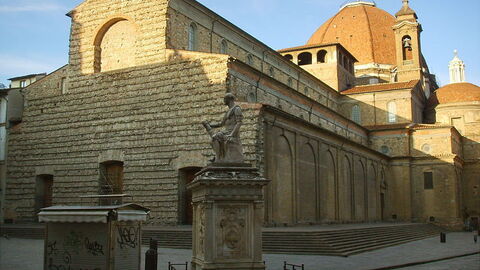
Basilica di San Lorenzo
Michelangelo fans who have found luxury villas in Florence would probably already be headed to the Basilica di San Lorenzo to visit the Medici Chapel, where his monumental tombs designed for Lorenzo il Magnifico and Giuliano dei Medici are housed.

However, there is another reason to stick around and try and befriend any groundsmen you might come across: hidden beneath the chapel is a secret room that has walls covered in drawings by Michelangelo.

The incredible sketches in the room are said to have been created in 1530, while Michelangelo was hiding from the Pope, a Medici. One of those who grew weary of the iron fist that the Medici were ruling the city with, Michelangelo stood up against the powerful family by working to help fortify the city walls against them and, as a result, was forced into hiding for three months!     Read More


Abbazia di Sant'Antimo
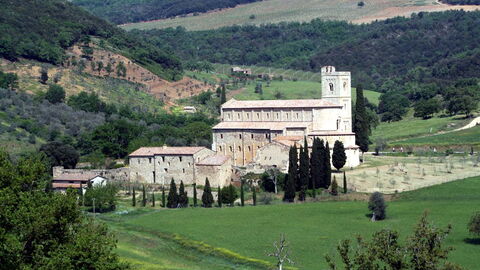
The Abbey of Sant’Antimo, located 9km from Montalcino in Tuscany, is one of the most beautiful of all Romanesque churches in Italy. Local legend attributes its foundation to Charlemagne in the 8th century AD, a miracle that helped cure his army of a plague and a promise to build an abbey on the land where they were saved. Recorded history, however, has a different tale to tell and puts the foundation further back, to the Longobards and the Monastery of St. Savior. The site also is thought to have originally been the location of an ancient Roman villa. The existence of Sant'Antimo, itself, is recorded since at least the 9th century.     Read More


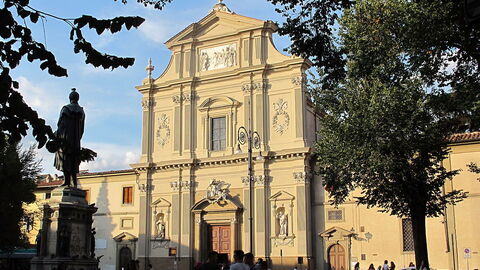
San Marco
As we mentioned in the last post, temperatures can soar in Florence in the summer and, in a big city full of tourists, wandering around can become particularly uncomfortable. If you have found a luxury villa in Florence and are planning a trip there this summer, you may have to deal with beating the heat so we have compiled some tips to help keep you cool.

3. Visit a Church

Popping into a church is a great way to cool down and get out of the sun for a bit but you may want to avoid one with long lines and big tourist crowds. There are plenty of smaller, less famous but beautiful churches to discover around the city and these will offer you cool interiors to get away from the heat, while enjoying the art and history. Just be sure to have a sweater to cover bear shoulders or wrap around your waist if you are wearing shorts.     Read More


Carrara Cathedral
Carrara is a Tuscan town that is famous worldwide for its marble and is the centre of the Apuan-Versilia marble trade.

Since Roman times, it has been where artists and architects from the world over have gone to source their marble, the likes of Michelangelo among them. Situated along the Ligurian Sea, in north-western Tuscany, it is a charming town that features the material it is so famous for in buildings throughout. A particular highlight is the Cathedral, or Duomo: with almost the entire exterior being covered in Carrara marble, it really is a perfect advertisement for the town's “white gold”.

Another, older church, once stood on the same site. The Ecclesia Sancti Andree de Carraria has records going back as early as 1035 but only a bas-relief remains of the original structure. Construction of the new building, also dedicated to St Andrew, began in the 11th century and was completed in the 14th century.     Read More