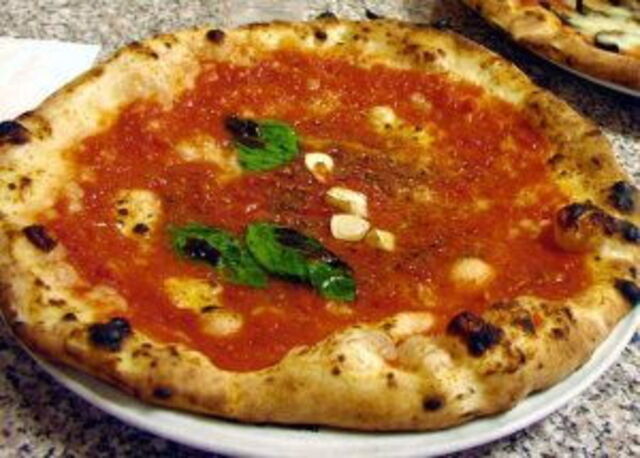
When visiting Italy for the first time, many people are surprised when they walk into a pizzeria and see true Italian pizza. You won't find thick, greasy, deep-dish American pizza in Italy. Italian pizza will have a thin and flexible crust with very little sauce and few toppings in comparison to American-style pizza. However, the pizza is flavorful, delicious and considerably healthier. A stop in a small pizzeria will provide you with a perfect lunch or afternoon snack during your trek through Italy.
While no one disputes that pizza is an Italian creation, it seems odd that two of the main ingredients are foreign to the peninsula.
The mozzarella di bufala that is often used in pizzerias comes not from cows milk but the water buffalo introduced from India. The other main ingredient in pizza is tomato, which wasn’t used in cooking until the nineteenth century. They were brought over in the sixteenth century from America but were considered poisonous by most. We have the peasants of Naples to thank for first attempting to use the ‘poisonous’ fruit on a pizza.
While no one disputes that pizza is an Italian creation, it seems odd that two of the main ingredients are foreign to the peninsula.
The mozzarella di bufala that is often used in pizzerias comes not from cows milk but the water buffalo introduced from India. The other main ingredient in pizza is tomato, which wasn’t used in cooking until the nineteenth century. They were brought over in the sixteenth century from America but were considered poisonous by most. We have the peasants of Naples to thank for first attempting to use the ‘poisonous’ fruit on a pizza.
Pizza quickly became a staple in Naples, with pizza carts all over the town, and it became a fast and easy way to eat lunch or dinner. The first actual pizzeria was opened in Naples in 1830 and is still producing pizza today. It was at first considered a peasant food but after a visit to Naples from the King and Queen of Italy the, now most famous, Pizza Margherita was created. A local Pizzaioli created it in honor of Queen Margherita herself, with the colors of the new Italian flag. A simple topping of tomato sauce, basil leaves and mozzarella made up the Pizza Margherita and it quickly became the standard.
Today pizza is just as popular as ever, remaining a quick and delicious alternative to a full course meal. Each pizzeria you visit will have it’s own variations on popular recipes, and certain house specialties. Pizzas will be made by hand after you order them and most often people will order a whole pizza, as they are typically considered a ‘personal’ size, to themselves and your first bite will explain why. While this may seem a bit much to people acquainted with American pizza, the lighter original pizza is not as overwhelming as ours.
Pizza has seen many evolutions over the years and the many miles it has traveled from its homeland in Naples. While you may still enjoy the Chicago deep dish, piled to the ceiling with toppings and extra cheese, during your trip to Italy make sure to stop in a pizzeria and give the Margherita a try. It can be hard to compare one to the other, as they are so different in style but consider it a gastronomic history lesson and enjoy!
Today pizza is just as popular as ever, remaining a quick and delicious alternative to a full course meal. Each pizzeria you visit will have it’s own variations on popular recipes, and certain house specialties. Pizzas will be made by hand after you order them and most often people will order a whole pizza, as they are typically considered a ‘personal’ size, to themselves and your first bite will explain why. While this may seem a bit much to people acquainted with American pizza, the lighter original pizza is not as overwhelming as ours.
Pizza has seen many evolutions over the years and the many miles it has traveled from its homeland in Naples. While you may still enjoy the Chicago deep dish, piled to the ceiling with toppings and extra cheese, during your trip to Italy make sure to stop in a pizzeria and give the Margherita a try. It can be hard to compare one to the other, as they are so different in style but consider it a gastronomic history lesson and enjoy!