Borgo a Mozzano
Posted in: Curiosities Legends Localities Lucca Must See Attractions Siena Top 10 Lists Tourist Attractions
Tuscany might not be the most obvious Hallowe'en destination or spot for spooky adventures but, given how steeped in history and legend it is, it should be no surprise that it actually is quite a fun and fascinating place to spend the season. From creepy legends to haunted castles, there are spooky attractions and sites at every turn. So, why not discover some of the creepiest spots in Tuscany and get planning a vacation for Hallowe'en or, if you're always in the mood for such an adventure, any time throughout the year...

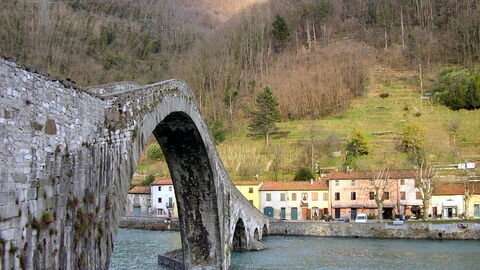
1. The Devil's Bridge and Hallowe'en Celebrations in Borgo a Mozzano

Located in the province of Lucca, this Tuscan town is most famous for the Ponte del Diavolo (or Devil's Bridge).
Posted in: Curiosities Localities Must See Attractions Siena Spa Tourist Attractions
Chianciano Terme can trace its origins to the 5th century BC, when the Etruscans arrived and built a temple that was dedicated to the god of Good Health, close to the Silene springs. Those springs and the waters of Chianciano have been a tourist destination and an attraction for their medicinal properties since Roman times and Horace himself is known to have bathed in and imbibed the waters.

Chianciano continued to both draw visitors and function as a regular town over the centuries but, in the 20th century, the springs specifically attracted the attention of developers and neoclassical buildings and facilities were built in the 20s and 30s. In the 40s, the then Fascist-controlled state took possession and destroyed and replaced these, drawing up a new plan under architects Loreti and Marchi. This plan was adjusted by the Town Technical Office of Chianciano in 1958 and eventually passed in 1961 and, today, there is the Old Town and New Town where the thermal spring spas were designed.
Streets of Radicondoli
Posted in: Localities Must See Attractions Pretty Views Siena Tourist Attractions
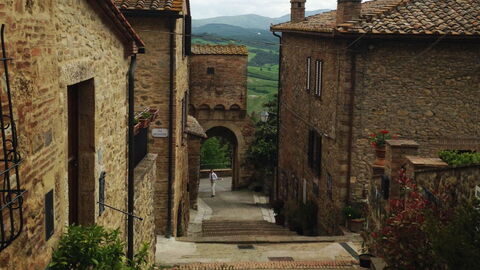
There is no shortage of incredible and picturesque villages and towns in Tuscany but one of the most charming is Radicondoli in the Province of Siena. Located about 60km southwest of Florence and about 25km southwest of Siena. This pretty, millennia-old walled town is perched on a hilltop with panoramic views over the rolling hills of the surrounding Tuscan countryside.

With cobblestone streets, a close-knit community, a delicious locally-sourced local cuisine and sustainable lifestyle, it is home to less than a thousand people and is an idyllic little spot, a world away from tourist attractions and crowds.

This is an authentic and picturesque place that is terribly photogenic and a perfect little enclave to escape to on holidays. Just find a vacation rental in Radicondoli and come discover its charms for yourself.
Rapolano Terme
Posted in: Localities Pretty Views Siena Spa Tourist Attractions
Rapolano Terme is a charming spa town located near Siena that was founded by the Romans and is still home to two ancient thermal baths, Antica Querciolaia and Terme di San Giovanni, both of which are available to be visited all year round. It is a perfect place to relax and unwind in a pretty Tuscan setting so find a vacation rental in Rapolane Terme and come discover its charms for yourself.

With a small historic centre surrounded by more recent buildings, the town of Rapolano Terme is an attractive and picturesque place set within the rolling Tuscan countryside and surrounded by vineyards and fields. Red tiled roofs top stone buildings with lots of character and, as the centrepiece of the whole town, there are the two beautiful thermal complexes with baths, swimming pools and wellness centres.
Pici Pasta
Posted in: Food and Wine Localities Products & Specialities Recipes Siena
Pici are a thick, hand-rolled kind of pasta that look a little like fatter pieces of spaghetti and originated in the Montalcino area of the province of Siena in Tuscany. Sometimes referred to as pinci, they are made from a simple dough, typically made from only flour and water, though egg is sometimes added, depending on the recipe you are following. Like with many Tuscan foods, different families have their own tricks and methods that are handed down over the years and, so, some families will use egg and others will swear against it.