There are plenty of incredible museums that one might not even think of visiting as they may seem too niche or not particularly interesting to oneself at first glance. However, when presented well, any topic can be fascinating! A great example of this, and of a lesser-known museum in Tuscany that many inadvertently skip over, is Le Navi Antiche di Pisa, or the Museum of Ancient Boats in Pisa. A museum dedicated entirely to boats may not seem immediately appealing to many but this astounding institution is truly remarkable as it presents full-sized vessels from the past in an old warehouse space that one can admire and be awed by in person. Described as the, “Pompeii of the sea,” this museum presents ships from a period spanning over a 1000 years that were found perfectly preserved. Eerie, majestic, and singular, this is an extraordinary attraction that is a must-see for any history lover who has been browsing our luxury villas in Pisa and is planning on coming to explore this beautiful and ancient Italian city.
19
Nov
2020
2020
In the previous article, we discussed the main attraction to the beautiful spa town of Monsummano Terme in Tuscany, which is the spa resort and cave system with natural hot springs and therapeutic steam of Grotta Giusti. While this is the main attraction and soaking in the waters, going for a facial, having a massage, trying out cave-diving in the thermal waters, and more all are things that anyone who has found a vacation rental in Monsummano Terme must pencil in during their visit, there are some other great things to see and do in town. One of these other wonderful attractions in Monsummano Terme is the excellent Museo di Arte Contemporanea e del Novecento.
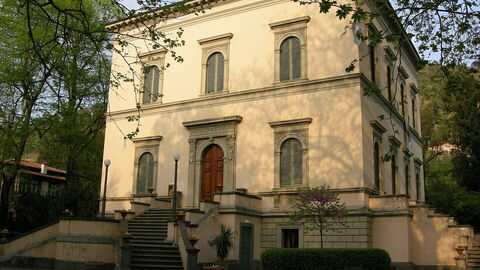
The Museo di Arte Contemporanea e del Novecento, or Museum of Contemporary and Twentieth Century Art (also known as Mac, n), is an excellent museum located inside the pretty and historic Villa Renatico Martini in Monsummano Terme. Opened to the public in 2000, the museum hosts a permanent collection, the Civic Collection, that is made up of paintings, other graphic works, engravings, videos, photographs, installations, sculptures, and more, created with different techniques and materials, largely by Italian artists from the 20th century onwards. Artists represented in this collection include Pietro Annigoni, Vinicio Berti, Ferdinando Chevrier, Lamberto Pignotti, Eugenio Miccini, and Ketty La Rocca and there are works by international artists also on display including works from France, Holland, Greece, and more. In addition to this fixed collection, the museum regularly holds temporary exhibitions and events.
23
Oct
2020
2020
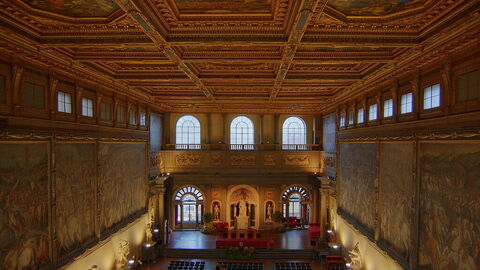
The Palazzo Vecchio is the beautiful and historic (and haunted) old town hall of Florence. Located right at the centre of the historic core of the city, it is one of many fascinating architectural gems in the area. However, if you have found a luxury villa in Florence and are interested in the history and heritage of the capital of Tuscany and the birthplace of the Renaissance then a visit to the Palazzo Vecchio to learn more about the origins of the city and how it developed up to the present day, who ruled over the lands, how the city has expanded and physically changed, important citizens throughout the ages from princes to artists to scientists, and more is a definite must. However, while you are exploring the building and being given context on the history of the city by your tour guide, be sure to pay attention to one room, in particular: the Salone dei Cinquecento, or Hall of the Five Hundred.
15
Oct
2020
2020
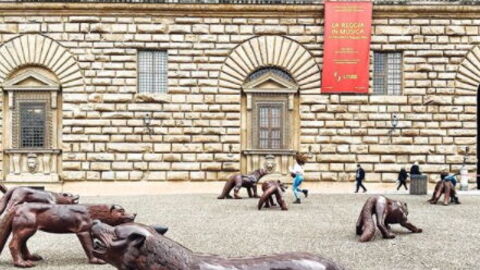
For a little under one more month the Palazzo Pitti boasts yet another attraction that further cements its place as a must-see for art-lovers who have found a luxury villa in Florence and are planning an Autumn getaway in Tuscany. Already a stunning Renaissance palace that is surrounded by the famously lovely Boboli Gardens and that houses incredible institutions such as the Palatine Gallery, the Silver Museum, the Gallery of Modern Art, and several other gallery spaces and exhibitions, the Palazzo Pitti is also currently ringed by 100 metal wolves by the Chinese artist Liu Ruowang.
This incredible sculptural installation is on display in Pitti Square and Santissima Annunziata Square and will continue to be shown until the 2nd of November 2020. Symbolising the aggression of man on the planet and a corresponding reaction from nature, these wolves have invaded the grounds of this cultural hub in Florence and work as a looming and foreboding presence.
14
Oct
2020
2020
There are some museums that are perhaps too niche for some but absolutely fascinating to others. A great example of this is the Museum of Straw and Straw Weaving (Museo della Paglia e dell’Intreccio) in Signa, which celebrates the long tradition of hat-making in Tuscany and in Signa, in particular. For some, that may seem a little too specific and not particularly interesting but serious fashion-lovers who are interested in the incredible history of clothes-making and of trend-setting and style and the vibrant heritage of crafts that are still very much alive in Tuscany, it is sure to be of interest. If you have found a luxury villa in Florence but you're looking for a great day-trip destination then a visit to the pretty town of Signa is a wonderful idea and if you're one of those fashion-obsessed visitors to Florence, the town's history of hat-making and the museum that is dedicated to this heritage is a must-see while there!
The Domenico Michelacci Museum of Straw and Straw Weaving in Signa is located in the municipal building in town that also houses the municipal library and the historical archive. Signa, of course, is the perfect setting for such a museum as this old artisanal tradition dates back centuries upon centuries in the town. In fact, by the 16th century, the weaving of straw had become so refined and perfected in Tuscany that the Grand Duke Cosimo I is known to have sent examples of locally-made hats as gifts to sovereigns of kingdoms all over Europe. By the beginning of the 18th century, the woven goods and hats of Signa had become so sought after that local farmers began producing wheat that was exclusively grown to create straw for hat-making and not for consumption. As a result, Florence and the surrounding area, including Signa, became the biggest producer of quality straw hats in all of western Europe.