When you plan a holiday, you can find that costs begin to add up quick and it is always good to have some excellent but inexpensive or free activities to add into your itinerary. If you are planning a vacation in Tuscany and you have found a villa with a pool in Siena, for example, then you should definitely consider planning a trip to the Natural History Museum of the Accademia dei Fisiocritici in Siena.
2
Dec
2020
2020
Looking forward to your next holiday is often the only thing that keeps us going as the year draws to a close and energies are at a low point. However, the end of the year is also a great time to start thinking ahead and planning and to have something to give you that boost you need. Booking a villa with us now will ensure that you really have the pick of the lot, with most our best luxury villas in Tuscany and villas with pools in Tuscany yet to be snatched up for the next summer season. You may, however, be wondering what kinds of villas and vacation rentals in Tuscany we offer and which one is best suited to you and your needs. Here is our guide to the kinds of rentals that you can choose from on our site.
1. Independent/Private Villas
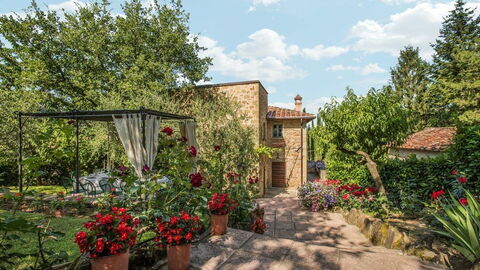
These independent villas in Tuscany are standalone properties that are not connected to any other buildings, usually with a decent garden or grounds surrounding the property. These are ideal vacation rentals for those looking for space, privacy, and peace and quiet. Some examples of our private villas in Tuscany include: Torre del Cielo in Monterchi and Villa Vigliano near Florence.
1. Independent/Private Villas
These independent villas in Tuscany are standalone properties that are not connected to any other buildings, usually with a decent garden or grounds surrounding the property. These are ideal vacation rentals for those looking for space, privacy, and peace and quiet. Some examples of our private villas in Tuscany include: Torre del Cielo in Monterchi and Villa Vigliano near Florence.
30
Nov
2020
2020
Posted in: Architectural Gems
Castles & Palaces
Localities
Museums & Galleries
Must See Attractions
Siena
Tourist Attractions
Tuscany is home to some exceptional old palaces that were once the elegant dwellings of the wealthy and the nobility of Italy in the past but are now open to the public to explore and are also home to some important and fascinating museums, venues, and other cultural institutions. One particularly great example of this is the Palazzo Chigi-Saracini, also known as the Vestri Palace, which is located in the stunning historic centre of the city of Siena. If you have found a luxury villa in Siena and are spending some time wandering and exploring this very charming Tuscan town, then stopping into the Palazzo Chigi-Saracini to have a look around this exceptional beauty and the, not one, but two incredible cultural gems housed within it is an absolute must.
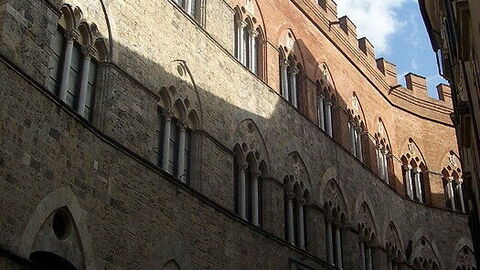
Built in the 12th century, the Palazzo Chigi-Saracini is an architectural gem that was first erected by the aristocratic Marescotti family of Siena on top of the site of a castle that they owned in Siena. So central were the Marescotti to public life in Siena that before the eventual construction of the Palazzo Pubblico, this building was even used as a seat of the Council of the Republic of Siena. Of this earlier form of the palace, only a tower that stands next to the present palace still exists. Reconstructions, alterations, and additions that came later eventually created the Gothic beauty that is the present Palazzo Chigi-Saracini on the Via di Città in the Terzo di Città, which is composed of two floors: a ground floor in stone and a first floor in brick, with two orders of trifore windows. On the façade, a reminder of the Marescotti family remains in their emblem of an eagle with outstretched wings that is visible on these windows.
Built in the 12th century, the Palazzo Chigi-Saracini is an architectural gem that was first erected by the aristocratic Marescotti family of Siena on top of the site of a castle that they owned in Siena. So central were the Marescotti to public life in Siena that before the eventual construction of the Palazzo Pubblico, this building was even used as a seat of the Council of the Republic of Siena. Of this earlier form of the palace, only a tower that stands next to the present palace still exists. Reconstructions, alterations, and additions that came later eventually created the Gothic beauty that is the present Palazzo Chigi-Saracini on the Via di Città in the Terzo di Città, which is composed of two floors: a ground floor in stone and a first floor in brick, with two orders of trifore windows. On the façade, a reminder of the Marescotti family remains in their emblem of an eagle with outstretched wings that is visible on these windows.
21
Aug
2020
2020
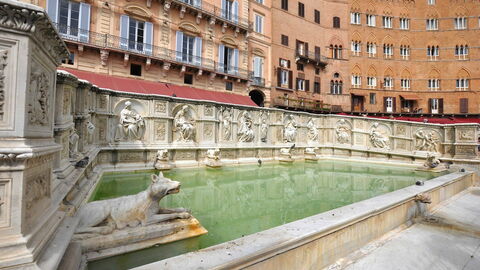
If Rome has the Trevi Fountain, then Siena has the Fonte Gaia. While not nearly so famous as the former, the Fonte Gaia is a serious looker and impressive artistic gem that is covered in stunning sculptural works. If you have found a luxury villa in Siena and are spending time in this beautiful city, then be sure to set aside some time to come and admire this incredible fountain and its wonderful decorative scheme for yourself. And, maybe, as with the Trevi Fountain, bring along a coin to toss in and make a wish.
The Fonte Gaia is located in Siena's famous Piazza del Campo, where the city's iconic Palio horse races are held each summer. The main square of the town, it is a massive, charming space filled with eateries and shops and is one of the places that locals, visitors, and tourists all end up floating to at some point. When you make it there, you will likely see a crowd gathered around the Fonte Gaia, something which is a permanent fixture of the square but much less intense and large than the crowds that constantly gather around the Trevi Fountain. You probably won't have to wait around for quite as long to get your chance for a look, a wish, and a photo!
The Fonte Gaia is located in Siena's famous Piazza del Campo, where the city's iconic Palio horse races are held each summer. The main square of the town, it is a massive, charming space filled with eateries and shops and is one of the places that locals, visitors, and tourists all end up floating to at some point. When you make it there, you will likely see a crowd gathered around the Fonte Gaia, something which is a permanent fixture of the square but much less intense and large than the crowds that constantly gather around the Trevi Fountain. You probably won't have to wait around for quite as long to get your chance for a look, a wish, and a photo!
8
Jul
2020
2020
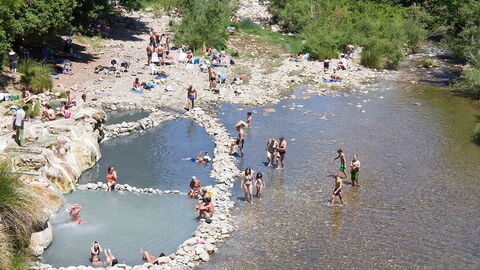
While it may be news to some that Tuscany is one of the best spa destinations in the world, we have written extensively about the different thermal springs, spa towns, and spa complexes located across the region in the past. In fact, there are plenty of different options to choose from and one could even go on a spa town tour, if they wanted to, while spending time in Tuscany. However, if you have found a luxury villa in Siena and are looking to go on a spa day while staying in the province, then we recommend a visit to Bagni di Petriolo.
Famous for its thermal springs since the time of the Ancient Romans and with awareness of the healing benefits of the waters dating back as far as 1200AD, Bagni di Petriolo has long since attracted visitors who come to imbibe and soak in her waters. Throughout the centuries, the town has even drawn some particularly famous and high-profile figures from all over – including popes, cardinals, the Medici, the Malatesta family of Pesaro, the family of the Duke of Urbino, and the Gonzaga family of Mantua – such was its reputation.
Famous for its thermal springs since the time of the Ancient Romans and with awareness of the healing benefits of the waters dating back as far as 1200AD, Bagni di Petriolo has long since attracted visitors who come to imbibe and soak in her waters. Throughout the centuries, the town has even drawn some particularly famous and high-profile figures from all over – including popes, cardinals, the Medici, the Malatesta family of Pesaro, the family of the Duke of Urbino, and the Gonzaga family of Mantua – such was its reputation.